Trauma-Informed Therapy: What It Is & Why Traditional Therapy Often Falls Short
"I understand my anxiety logically, but I still feel it." Sound familiar?

You've read the self-help books. You've tried deep breathing. Maybe you've even been in therapy before—talking through your childhood, analyzing your thoughts, learning to reframe your fears. And yet, despite understanding your patterns intellectually, something still feels off. Your body still tenses when the phone rings. Your chest still tightens before difficult conversations. You still can't seem to fully relax.
If this resonates, you're not failing at healing. You may simply be working with an approach that only addresses half the problem.
Trauma-informed therapy offers a different path. Instead of asking "What's wrong with you?" it asks a more compassionate question: "What happened to you?" This shift in perspective changes everything about how healing unfolds.
What Is Trauma-Informed Therapy?
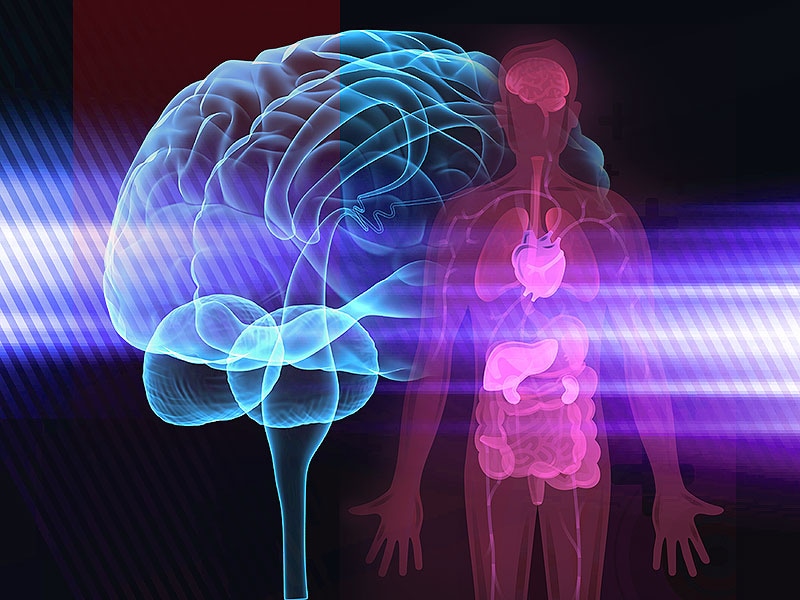
Trauma-informed therapy is an approach to mental health care that recognizes how deeply past experiences shape the brain, body, and nervous system. It's not a single technique but rather a framework that informs how therapy is conducted—prioritizing safety, understanding, and collaboration at every step.
At its core, trauma-informed therapy operates from a fundamental insight: many of the symptoms that bring people to therapy—anxiety, depression, emotional numbness, chronic tension, difficulty in relationships—aren't random malfunctions. They're often the nervous system's logical response to experiences that felt overwhelming or unsafe.
This means that overthinking, people-pleasing, perfectionism, hypervigilance, and emotional shutdown aren't character flaws. They're adaptations. Your nervous system learned these patterns to keep you safe in environments where they made sense. The problem is that these patterns often persist long after the original threat has passed.
The Five Principles of Trauma-Informed Care
The Substance Abuse and Mental Health Services Administration (SAMHSA) identifies five key principles that guide trauma-informed approaches:
Safety
Creating physical and emotional safety is the foundation. Healing cannot happen when your nervous system is in defense mode.
Trustworthiness
The therapeutic relationship is built on transparency, consistency, and clear boundaries—essential for people whose trust has been broken.
Choice
You maintain control over your healing process. Nothing happens without your consent or readiness.
Collaboration
Therapy is a partnership. Your therapist brings expertise, but you're the expert on your own experience.
Empowerment
The goal is to build your own capacity for regulation and resilience, not to create dependence on therapy.
Why Traditional Talk Therapy Often Falls Short
Traditional cognitive approaches to therapy have helped millions of people. But for those carrying unresolved trauma—even trauma they may not recognize as such—talk therapy alone often hits a wall.
Here's why: conventional talk therapy typically focuses on the thinking brain. It helps you identify negative thought patterns, challenge irrational beliefs, and develop more balanced perspectives. This is valuable work. But trauma doesn't live only in the thinking brain.
When you experience something overwhelming, especially early in life, the memory of that experience gets encoded not just in your thoughts but in your body. Your muscles hold tension patterns. Your nervous system stays calibrated for danger. Your stress response remains on a hair trigger.
This is why you can understand, logically, that you're safe—and still feel anxious. Your thinking brain knows there's no threat. But your nervous system hasn't gotten the memo.
Traditional Talk Therapy
- Focuses primarily on thoughts and beliefs
- Uses logic to challenge fears
- Works with the conscious mind
- May revisit traumatic memories directly
- Measures progress by insight gained
Trauma-Informed Therapy
- Addresses both mind and body
- Teaches nervous system regulation
- Works with unconscious survival responses
- Processes memories only when the system is ready
- Measures progress by felt safety and regulation
This isn't about one approach being "better" than another. It's about recognizing that different types of struggles require different tools. If your symptoms are rooted in nervous system dysregulation, you need approaches that speak to the nervous system—not just the intellect.
Common Signs Talk Therapy Isn't Enough
- You understand your patterns but can't seem to change them
- You've processed events verbally but still feel triggered by reminders
- You leave sessions feeling intellectually clear but emotionally unchanged
- Physical symptoms (tension, stomach issues, sleep problems) persist despite insight
- You feel worse after talking about difficult experiences, not better
What Counts as Trauma?
When most people hear "trauma," they think of catastrophic events—combat, assault, serious accidents. These are certainly traumatic. But they represent only a fraction of the experiences that can dysregulate the nervous system.
Trauma, in its broader sense, is any experience that overwhelms your capacity to cope and leaves a lasting imprint on your nervous system. This definition opens the door to understanding why so many "high-functioning" people struggle with anxiety, hypervigilance, or emotional disconnection—even without a single dramatic event in their history.
Big-T Trauma vs. Little-t Trauma
Mental health professionals often distinguish between two categories:
Big-T Trauma
- Life-threatening events
- Physical or sexual assault
- Serious accidents
- Natural disasters
- Witnessing violence
- Combat exposure
Little-t Trauma
- Emotional neglect
- Chronic criticism or shaming
- Unpredictable caregivers
- Bullying
- Relationship betrayal
- Medical procedures
The distinction isn't about severity of impact. Little-t traumas, especially when repeated over time, can be just as impactful on the nervous system as a single big-T event. In some ways, chronic little-t trauma can be more insidious because it doesn't announce itself as traumatic. It just feels like "how things were."
How Trauma Changes Your Nervous System
To understand why trauma-informed approaches work, it helps to understand what happens in your body when you experience overwhelming stress.
Your autonomic nervous system—the part that operates below conscious awareness—is constantly scanning for safety and threat. This process, which researcher Stephen Porges calls "neuroception," happens automatically, without your input.
When your nervous system detects danger, it activates survival responses. These responses aren't choices—they're automatic, lightning-fast reactions designed to keep you alive.
The Four Survival Responses
Mobilizing energy to confront the threat. Shows up as anger, irritability, the urge to argue or control.
Mobilizing energy to escape. Shows up as anxiety, restlessness, over-busyness, the urge to flee or avoid.
Immobilizing when escape seems impossible. Shows up as numbness, dissociation, feeling stuck or paralyzed.
Appeasing the threat to stay safe. Shows up as people-pleasing, difficulty saying no, losing yourself in relationships.
In a healthy nervous system, these responses activate when needed and then resolve. You face the threat, survive it, and your body returns to baseline. But when trauma isn't processed—when the experience is too overwhelming or when you lack support—the nervous system can get stuck.

What a Dysregulated Nervous System Feels Like
When your nervous system is stuck in survival mode, you may experience:
Chronic Anxiety or Hypervigilance
Your system stays in fight-or-flight even when there's no actual threat. You're always scanning for danger, can't fully relax, and startle easily.
Emotional Numbness or Disconnection
Your system has shifted into freeze to protect you from overwhelming feelings. You may feel like you're watching life from behind glass.
Exhaustion That Sleep Doesn't Fix
Maintaining a constant state of alertness is metabolically expensive. Your body is tired from being on guard all the time.
Difficulty Being Present
Your mind constantly pulls you into the past (rumination) or future (worry) because your system doesn't feel safe in the present moment.
Relationship Struggles
Intimacy requires vulnerability, which requires feeling safe. A dysregulated nervous system may interpret closeness as threat.
Physical Symptoms Without Medical Cause
Chronic pain, digestive issues, headaches, and tension often have roots in nervous system dysregulation.
This Is Not Your Fault
If you recognize yourself in these patterns, please understand: this isn't weakness, laziness, or a character flaw. Your nervous system adapted to survive difficult circumstances. Those adaptations made sense at the time. Trauma-informed therapy helps your system learn that the circumstances have changed—and that it's finally safe to come out of survival mode.
What Happens in Trauma-Informed Therapy
One of the most important things to know about trauma-informed therapy: it does not require you to relive painful experiences. In fact, diving into traumatic memories before your nervous system is ready can be retraumatizing rather than healing.
Trauma-informed therapy typically follows a phased approach, with safety and stabilization coming first.
Phase 1: Safety & Stabilization
Before addressing any past experiences, your therapist helps you build a foundation of safety. This includes developing a trusting therapeutic relationship, learning to recognize your nervous system states, and building practical skills for regulation. You'll develop resources—internal and external—that help you feel grounded and contained. This phase is not preliminary work to rush through. For many people, it's where the most significant healing happens.
Phase 2: Processing
Once you have a solid foundation of safety and regulation skills, you may choose to work with specific memories or experiences. This is done gradually, in a titrated way that keeps you within your "window of tolerance." Processing doesn't mean endlessly talking about what happened. It means helping the nervous system complete responses that got interrupted, release stored tension, and update its understanding of past and present safety.
Phase 3: Integration & Reconnection
The final phase focuses on integrating your new capacities into daily life. This includes rebuilding or strengthening relationships, rediscovering interests and meaning, and developing a new relationship with yourself. Many people find that as their nervous system heals, aspects of life that felt impossible—intimacy, relaxation, joy—begin to open up naturally.
What You'll Learn in Trauma-Informed Therapy
Common Trauma-Informed Approaches
Trauma-informed therapy isn't a single technique but a framework that can incorporate various evidence-based approaches. Here are some of the most widely used:
EMDR (Eye Movement Desensitization and Reprocessing)
Uses bilateral stimulation (often eye movements) to help the brain process traumatic memories. Extensively researched and recommended by the WHO and VA for PTSD treatment. Particularly effective for single-incident traumas but also used for complex trauma.
Somatic Experiencing (SE)
Developed by Peter Levine, SE focuses on releasing trauma stored in the body. Works with physical sensations and helps complete interrupted survival responses. Particularly gentle and effective for people who feel overwhelmed by traditional talk approaches.
Internal Family Systems (IFS)
Views the psyche as composed of different "parts," including protective parts that developed in response to trauma. Helps you develop a compassionate relationship with all parts of yourself, including those that create symptoms you'd rather not have.
Trauma-Focused CBT
Adapts cognitive-behavioral techniques for trauma, combining gradual exposure with cognitive restructuring and relaxation skills. Strong research base, particularly for children and adolescents.
Polyvagal-Informed Therapy
Based on Stephen Porges' Polyvagal Theory, this approach focuses on understanding and working with the autonomic nervous system's hierarchy of responses. Emphasizes creating safety signals that help the nervous system shift out of defense.
Sensorimotor Psychotherapy
Integrates body awareness, movement, and traditional talk therapy. Helps process trauma through attention to physical experience while maintaining cognitive engagement.
Most trauma-informed therapists are trained in multiple approaches and will tailor treatment to your specific needs, preferences, and goals. You don't need to know which approach is right for you before starting—that's something you and your therapist will figure out together.
Who Benefits Most from Trauma-Informed Therapy
Trauma-informed therapy can help anyone whose current struggles are connected to past overwhelming experiences. But it may be particularly valuable if you:
Feel Anxious Without Clear Reason
Your worry seems disproportionate to actual circumstances. You're successful and safe, yet your body acts like danger is imminent.
Have Tried Other Approaches Without Lasting Change
You've done talk therapy, read books, tried meditation—and while you understand your patterns, you can't seem to shift them.
Experience Physical Symptoms Without Medical Cause
Doctors can't find anything wrong, but you have chronic pain, digestive issues, or tension that won't resolve.
Struggle to Relax or Be Present
Downtime feels uncomfortable. Your mind is always somewhere else—planning, reviewing, worrying.
Find Yourself Repeating Unhealthy Relationship Patterns
You keep ending up in similar dynamics despite knowing better. You struggle with boundaries, attraction to unavailable people, or fear of intimacy.
Have a History You've "Dealt With" But Still Feel Affected By
You've processed events cognitively but still get triggered. You've forgiven but haven't forgotten—in your body.
Many high-functioning women discover that trauma-informed therapy finally explains what nothing else could. They aren't broken, weak, or making a big deal out of nothing. Their nervous systems have been doing exactly what they were designed to do—protect them from perceived threat. The work isn't about fixing what's wrong but about updating what's outdated.
Can Trauma-Informed Therapy Work Online?
Yes—and often surprisingly well. While some people assume that trauma work requires in-person presence, research and clinical experience show that online trauma-informed therapy can be highly effective.

Why Online Therapy Often Enhances Trauma Work
What trauma-informed therapy requires isn't a physical office—it's connection, safety, and skilled guidance. All of these can happen through a screen when both therapist and client are committed to the work.
First Steps You Can Take Today
While working with a trained therapist is the most effective way to heal from trauma, there are evidence-informed practices you can begin today to start shifting your nervous system toward greater regulation.
A Note on Self-Help
These practices can support your nervous system, but they're not substitutes for professional support if you're struggling with significant trauma-related symptoms. Think of them as practices to add to your toolkit alongside therapy, not instead of it. If you find that self-regulation practices don't help or make things worse, that's valuable information—and a sign that working with a trauma-informed professional could be especially beneficial.
Frequently Asked Questions
Trauma-informed therapy is an approach to mental health care that recognizes how past experiences shape the brain, body, and nervous system. Rather than asking "What's wrong with you?" it asks "What happened to you?" This approach treats both the mind and body, understanding that symptoms like anxiety and hypervigilance are survival responses, not character flaws.
Traditional talk therapy often focuses on changing thoughts and using logic to manage emotions. Trauma-informed therapy recognizes that trauma is stored in the nervous system, not just the mind. It incorporates body-based techniques to help regulate the nervous system, which is why many people find relief with trauma-informed approaches after years of talk therapy alone didn't resolve their symptoms.
No. Trauma isn't limited to catastrophic events. Chronic stress, emotional neglect, growing up in unpredictable environments, relationship betrayal, and workplace burnout can all affect your nervous system. If you experience persistent anxiety, difficulty relaxing, or emotional numbness, trauma-informed therapy may help—even without a single "big" traumatic event.
No. Trauma-informed therapy prioritizes safety and stabilization before any processing of past experiences. When past experiences are addressed, it's done gradually and in a way that feels contained and manageable. The goal is to help you feel more regulated, not to overwhelm you by revisiting painful memories.
Yes. Online trauma-informed therapy can be highly effective. Many clients find that being in their own space actually helps them feel safer and more open. The key elements—connection, safety, and skilled guidance—translate well to virtual settings. Research supports the effectiveness of online therapy for trauma and anxiety.
Many people notice some relief within the first few sessions as they learn nervous system regulation techniques. Deeper healing of long-standing patterns typically takes several months. The timeline depends on individual factors including the nature of your experiences, your current support system, and your goals for therapy.
You Don't Have to Relive the Past to Heal It
If you've been pushing through, managing, and holding it together while something inside still doesn't feel at peace—you deserve support that meets you where you actually are. Trauma-informed therapy can help you finally feel as calm as you appear.
Book a Free ConsultationOnline therapy for women in Utah
Trauma-informed care • Flexible scheduling • No pressure
Ready to work with Reset and Rise Counseling?
Let's connect! We’re here to help.
Send us a message and we’ll be in touch.
Or give us a call today at 801-783-4101
Agency Contact Form
More Resources for Anxiety, Healing & Growth:
The Rise and Reset Journal